A life measured in small, bright moments
I first learned about Brooks Stephen Hill as a name threaded through family posts and quiet remembrances. He arrived on December 26, 2013. He left on February 24, 2014. Those 60 days were shaped by hospital corridors, soft blankets, whispered decisions, and a love that had the density of a mountain. Saying his life was brief is true. Saying it was small is wrong. Brooks occupied a universe in miniature.
I picture an infant hand curled around a parent finger. I picture two parents learning the limits of medicine and the breadth of their own courage. I picture a household with an older son, a brother born on October 7, 2011, learning how to be a sibling to someone who would live only in memory. For the family, dates are not numbers on a calendar. They are coordinates on a map that forever point back to one little human.
Family members and their roles
Family can be a shield and a lens at the same time. Here are the people who centered Brooks.
| Name | Relationship | Notes |
|---|---|---|
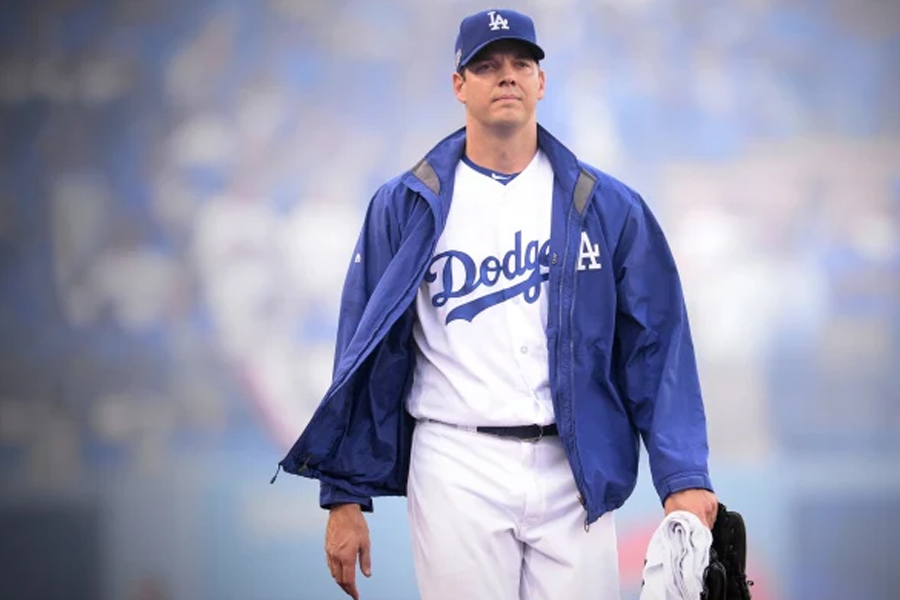
| Rich Hill | Father | Professional athlete, public about family life |
| Caitlin McClellan Hill | Mother | Medical professional background |
| Brice R. Hill | Older brother | Born October 7, 2011 |
| Lloyd Hill | Paternal grandparent | Named in family notices |
| Peggy Hill | Paternal grandparent | Named in family notices |
| Stephen McClellan | Maternal grandparent | Named in family notices |
| Susan McClellan | Maternal grandparent | Named in family notices |
I write these names not as headlines but as a ledger of human ties. Each entry is a short sentence in an ongoing family story. Each person is a witness.
Memory turned into action
One can either transmute or calcify their grief. In this instance, the family transformed their grief into a campaign to raise awareness of uncommon and unidentified genetic disorders. They made a $575,000 donation in late February 2019 to fund testing and research at a large pediatric hospital. That figure is important. It demonstrates a decision to turn personal suffering into the common good.
I have witnessed philanthropy function as a bridge. A family that has lost a kid has a private seashore on one side. The broad spectrum of researchers, medical professionals, and other families looking for solutions is the other side. This kind of donation puts boards on the bridge. With a goal of one million dollars, they started a campaign to raise more money. Campaign numbers aren’t dry. Beyond pain, a family makes these vows.
The way they honored Brooks at home and in the community
Some memorials are grand. Others are tactile and small. The family kept hospital mementos and arranged for a neighborhood dedication that turned a public play area into a place of remembrance. The playground, the toy, the hospital sticker these are the artifacts that anchor a memory in daily life. They are the things a brother can point to when he asks who Brooks was.
I think of those objects like fossils. They capture a moment in amber and allow the living to remember what once was without consuming the present.
Medical questions and the search for answers
Brooks was an infant who faced complex medical issues in the weeks after his birth. His family wrestled with treatments and with the decision to provide comfort care. There was later follow-up work by clinical teams to better understand the underlying condition. The family’s campaign has a clear focus on genetic testing and on giving other families faster routes to diagnosis.
Numbers here are stark. Two months of life. One family transformed into a campaign that donated over half a million dollars. Hundreds if not thousands of families potentially helped by research that receives stronger funding. The arithmetic is humble but its consequences are not.
Personal voice and reflection
Because distance might distort my feelings when I read about Brooks and his family, I wrote this in the first person. Such stories are under pressure to express everything while still having no significance. I don’t want that. I want to keep a few details close to hand: an elder sibling was born on October 7, 2011; December 26, 2013; February 24, 2014; and $575,000 was donated in 2019. Anchors are facts. Emotions are a breeze.
This family picked up new words fast, if mourning were a language. They learnt how to select public giving as a kind of private remembrance, how to say farewell, and how to hold presence and absence in one breath. The effort may be characterized as a ripple. Instead, I see concentric circles that extend beyond the coastline, formed by a stone placed into still water.
Timeline of key dates and events
| Date | Event |
|---|---|
| October 7, 2011 | Birth of older brother, Brice R. Hill |
| December 26, 2013 | Birth of Brooks Stephen Hill |
| February 24, 2014 | Death of Brooks at approximately 60 days old |
| February 28, 2019 | Public announcement of donation and campaign kickoff; donation amount $575,000 |
| 2019 onward | Ongoing philanthropic and awareness activities related to genetic research |
A timeline is less a story than a scaffold. Still, scaffolds show the shape of what was built.
The public narrative and private life
I notice a pattern. Public figures who experience private loss have choices: to hide, to speak, to act. This family chose to speak and to act. That decision changes the narrative. It places a private grief in the light of public life, where it becomes part memorial and part mission. The mission was explicit. It involved funding research and improving pathways for genetic diagnosis. It involved turning an intimate loss into a mechanism to help strangers.
FAQ
Who were Brooks Stephen Hill parents?
His parents were Rich Hill and Caitlin McClellan Hill. They made both private and public decisions about care and later focused on honoring Brooks through philanthropy.
When was Brooks born and when did he pass?
Brooks was born on December 26, 2013. He passed away on February 24, 2014. He lived approximately 60 days.
Did Brooks have siblings?
Yes. He had an older brother named Brice R. Hill who was born on October 7, 2011.
What was the family campaign about and how much was donated?
The family announced a campaign focused on rare and undiagnosed genetic conditions and donated $575,000 as part of the campaign kickoff in late February 2019. The campaign had a stated goal to raise additional funds up to a target of one million dollars.
Were medical answers found about Brooks condition?
Clinical teams conducted follow up work to better understand the condition. The family used their experience to prioritize faster routes to genetic testing and to support research so that future families might receive answers sooner.
How has the family memorialized Brooks locally?
The family preserved personal mementos and arranged community remembrances including a local dedication to honor his memory. These acts keep Brooks present in everyday places where family life continues.