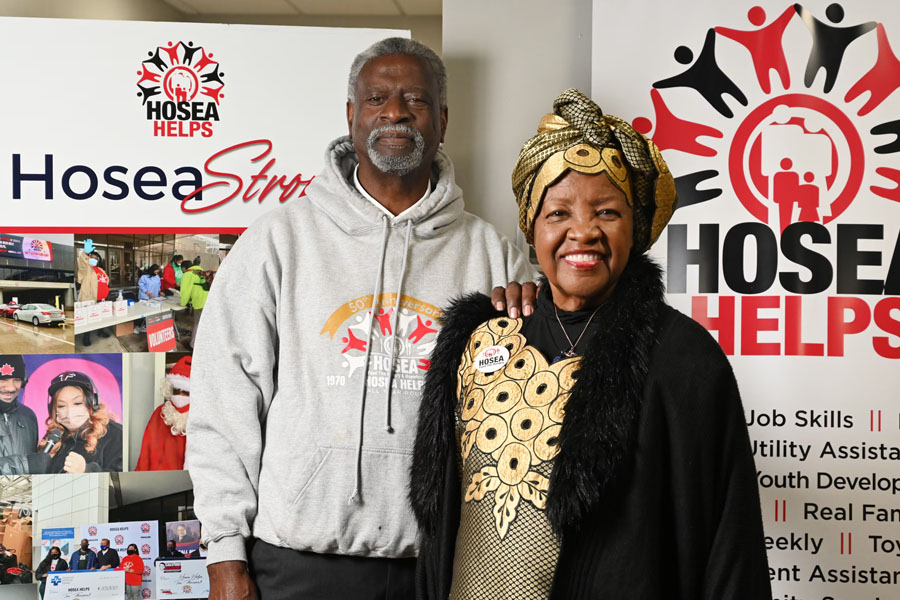
A personal introduction
I have watched and pieced together the threads that bind one Atlanta family to a city, and to a cause. The name Awodele Omilami reads like a hinge between past and present. He is a nonprofit leader, a son and a grandson, and for me he stands as a practical steward of a multigenerational mission. In November 2024 the public narrative around him tightened into a clear headline: Awodele assumed the role of executive director and chief executive officer of the family nonprofit. At about 44 years old then, he represents a second or third act for an organization that has been feeding and housing people for decades.
Family portrait in plain language
Families are living maps. Mine of facts and observations shows Awodele at the center of several concentric circles. Closest to him are his parents. Afemo Omilami is a veteran actor whose roles in film and television stretch across decades. Elisabeth Omilami is an activist and longtime leader of the family nonprofit. Their household produced a child who grew up in volunteer lines, who learned logistics by loading trucks and developed his leadership on cold November mornings handing out meals.
In the next ring are siblings and immediate kin. Juanita Omilami is his sister. Tara Omilami, his spouse, holds an operational role within the organization and partners with Awodele in daily service work. The next generation includes a child named Adeyemi, a reminder that this story continues in new voices.
Beyond that are the older generations and the family branches that feed into a wider civic network. Grandparents Hosea L. Williams and Juanita Terry Williams established a civic footprint that has shaped regional politics, community organizing, and social services. The Williams family name produces cousins, aunts, and uncles whose names appear in public records and local tributes: Andre Williams, Hyron Williams, Torrey Williams, Barbara Emerson, Yolanda Favors, Jaunita Collier and others.
A table of key family members
| Name | Relation | Short description |
|---|---|---|
| Afemo Omilami | Father | Actor with a long film and television career |
| Elisabeth Omilami | Mother | Longtime activist and previous leader of the nonprofit |
| Juanita Omilami | Sister | Family member active in private and community life |
| Tara Omilami | Spouse | Organizational leader and director of volunteer operations |
| Adeyemi Omilami | Child | Next generation |
| Hosea L. Williams | Grandfather | Civil rights leader and founder of the service organization |
| Juanita Terry Williams | Grandmother | Former public official and civic leader |
| Andre, Hyron, Torrey, Barbara, Yolanda, Jaunita | Extended family | Aunts, uncles, cousins active in community life |
Work and career in action
I think of Awodele as a person who built competence by doing. He worked in warehouse management, in logistics, and in volunteer training. Those are not glamorous roles on paper. They are the scaffolding that holds large service operations in the air. Over the 2010s and into the early 2020s he moved from those operational posts into leadership. By late 2024 he was publicly identified as the organization’s chief executive. That transition is worth more than a title change. It marks a handoff of institutional memory from the founder generation into an operational generation with a different set of skills.
Numbers matter in charity work. The organization runs programs that distribute food weekly, coordinate holiday distributions that serve thousands, and manage grant awards. I have seen grant pages and staff listings that show him listed as a manager of development and grants. That means he is responsible not just for handing out food but for ensuring budgets balance, for tracking outcomes, and for convincing partners and funders to invest time and money.
He appears on radio programs and community panels. He receives delegations, fields volunteers, and performs the daily arithmetic of mercy. Leadership in this context is a mix of planning and improvisation. You pack 1,000 meals one week and solve crowd control the next. Those tasks are where authority proves itself.
Money and management
I’ll say nonprofit financials are public without naming salaries. Recent yearly reports list Awodele as a significant employee for executive remuneration. That positioning proves his role isn’t symbolic. He participates in governance, grant reporting, and the fiscal boundary that limits the organization each year.
Service nonprofits must balance unrestricted donations, restricted grants, and in-kind contributions. They act like different home budget currencies. I see him as an executive who maximizes every dollar.
Timeline of public milestones
- circa 1980: approximate birth year based on stated age of 44 in late 2024. This is an estimate grounded in the public timeline of the family.
- 1990s and early 2000s: childhood involvement in family service routines. He learned the work at an early age.
- 2010s: roles in warehouse management and volunteer operations. Public appearances begin to appear in radio and local media.
- 2020 to 2023: increased operational responsibility as the organization navigated pandemic era disruptions.
- November 2024: documented leadership transition into the executive director and CEO role. Age about 44.
What drives the family mission
As I evaluated the names and dates, I realized this family practices service. Older generations constructed frameworks, middle generations maintained and developed programs, and younger generations professionalize the task. More than one person is responsible. A shared rhythm creates continuity.
Political and civic history permeates every meal distribution. Civil rights icon Hosea L. Williams. His legacy influences family values in two ways. It provides moral oxygen. It provides networks. If foundations, companies, and officials attend, networks turn food trucks into sustainable initiatives.
The texture of public life
I noticed a pattern: family photos and public statements blend private warmth with professional clarity. When you scroll through public posts there are images of volunteers, of children, of trucks. There are also the administrative pages that list staff, grant awards, and program calendars. That juxtaposition is the texture of modern civic life. It is both human and bureaucratic.
FAQ
Who is Awodele Omilami?
I view Awodele as a nonprofit executive and community leader. He is the son of Elisabeth and Afemo Omilami, a grandson of the civil rights leader Hosea L. Williams, a spouse to Tara, and a parent to Adeyemi. His public role as executive director and CEO began in late 2024 after years of operational work in the organization.
What organization does he lead?
He leads a nonprofit that operates food distribution, housing assistance and related social services. The organization traces its roots to work founded by Hosea L. Williams and has delivered thousands of meals annually through weekly and holiday programs.
What is his background in operations?
He came up through warehouse management, volunteer coordination and logistics. Those roles taught him hands on skills in inventory, distribution, and volunteer training. Over the 2010s and early 2020s he moved into management and then executive leadership.
Who are his immediate family members?
Immediate family includes his father Afemo, an actor; his mother Elisabeth, a longtime activist and past leader of the nonprofit; his spouse Tara, an operational director within the organization; his sister Juanita; and his child Adeyemi.
What about his extended family and civic heritage?
He is the grandson of Hosea L. Williams and Juanita Terry Williams. The extended family includes cousins and siblings across the Williams network such as Andre, Hyron, Torrey, Barbara Emerson, Yolanda Favors and Jaunita. They form a wide civic web in Atlanta public life.
When did he become executive director and CEO?
Public accounts record his transition into the executive director and CEO role in November 2024. That public milestone followed a period of increasing operational responsibility through the early 2020s.
Is his role paid and documented?
Yes. Executive roles in charities are reported in public nonprofit filings. He is listed among key employees in recent filings which document compensation and roles for governance and reporting purposes.
How does his leadership differ from the previous generation?
I see a shift from founder style leadership to operational professionalism. The previous generation established mission and public presence. The current generation focuses on systems, grants, and measurable program delivery while preserving the core ethos of service.