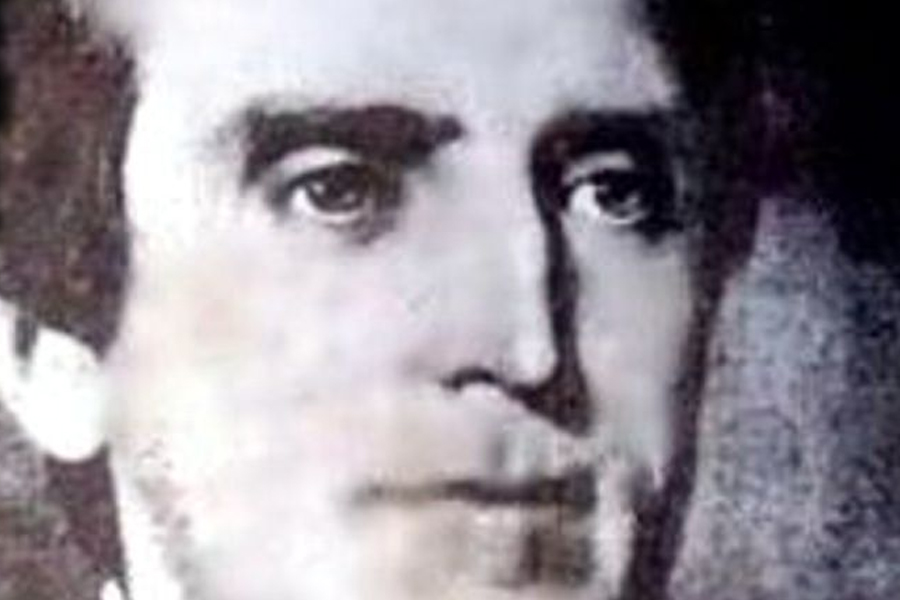
Early Life and Jeffersonian Roots
I first stumbled upon Moncure Robinson Taylor while tracing the intricate branches of American founding families. Born on February 23, 1851, in Jefferson County, Virginia, now part of West Virginia, he entered a world still echoing the ideals of his great-great-grandfather, Thomas Jefferson. His parents, John Charles Randolph Taylor (1812-1875) and Martha Jefferson Randolph (1817-1857), wove him into this storied tapestry. Martha, named after her grandmother, Jefferson’s daughter, carried the weight of Monticello’s legacy. She passed away when Moncure was just six, leaving a void in a household bustling with siblings.
The family home pulsed with Southern aristocracy. Moncure grew up amid the chaos of eleven siblings, each carving their path through turbulent times. The 1860 U.S. Census captures this scene: a young Moncure at nine, surrounded by kin in Virginia, just before the Civil War shattered the nation. His brothers, like Rev. Jefferson Randolph Taylor and Lt. Colonel Bennett Taylor, donned Confederate uniforms, their service a stark reminder of divided loyalties. Moncure, too young for the fray, watched as the conflict reshaped his world, like a storm uprooting ancient oaks.
By 1870, the census paints a different picture. Moncure, now 19, navigates a post-war South, his life intertwined with the land and its people. He resided at Locust Grove near Charlottesville, a property that became his anchor, symbolizing stability in an era of flux.
Interracial Bonds and Hidden Families
As I peeled back history, Moncure’s personal ties revealed a complex story like candlelight shadows. He had a long relationship with Rachael Robinson, born around 1849 and likely an African-American domestic servant, in the 1870s. She lived next door to the Taylors in 1870, single and with two mulatto children, indicating their relationship.
This unsaid yet profound union had at least two offspring. Lucy Robinson arrived in 1874, her life whispered into oblivion. 1883 brought Eva Robinson Taylor, who bridged eras. Eva was a servant at a Jefferson descendant’s home in the 1900 Census, a gentle reminder of fate. Rachael died in 1901, prompting Eva to marry and start a new life in Washington, D.C.
Moncure’s story reflects the South’s secret but ongoing racial relationships. These relationships have been uncovered by DNA and records from Eva’s 1950s great-granddaughter Gayle Jessup White. Journalist and Monticello community engagement officer Gayle represents reconciliation by bridging historical barriers.
Marriage and Legitimate Lineage
In October 1901, at age 50, Moncure wed Lucie Madison Willis, born in 1871 and hailing from a Virginia family. Their union, formalized in Orange County, marked a shift. Two years later, on March 4, 1903, their son John Byrd Taylor entered the world in Charlottesville. John lived until 1995, extending the Taylor line into the modern age.
This marriage contrasted sharply with Moncure’s earlier life. Lucie outlived him, passing in 1944, her role steadying the family amid change. Through John, the legacy persisted, though less publicly than through Eva’s line. I imagine Moncure at Locust Grove, overseeing lands that once sustained generations, his days a blend of quiet routine and familial duties.
Siblings and Extended Kin
Moncure’s siblings formed a constellation of lives, each star shining with varying intensity. Susan Beverly Taylor Blackburn married into another prominent family, her path one of domestic alliances. Rev. Jefferson Randolph Taylor, a clergyman and Confederate veteran, blended faith and valor. Margaret Randolph Taylor Randolph intertwined with the Randolph lineage through marriage, preserving bloodlines.
Lt. Colonel Bennett Taylor stood out, his military service in the Confederate Army etching him into history. Descendants like poet Tess Taylor, his kin, explore Jefferson’s heritage today, their voices adding poetry to prose. Jane Randolph Taylor, possibly unmarried, remains enigmatic. Cornelia Jefferson Taylor, born in 1849 and living until 1937, witnessed nearly a century of change.
Stevens Mason Taylor (1847-1917) and Edmund Randolph Taylor (1853-unknown) offer scant details, their stories fragments. Sidney Wayles Taylor died in infancy, 1855-1856, a brief spark. The younger John Charles Randolph Taylor (1857-1863) also departed young, losses that must have scarred the family soul.
These eleven siblings, plus Moncure, totaled twelve children from his parents’ union, a number reflecting the era’s large families. Their collective experiences paint a vivid portrait of resilience.
| Sibling Name | Birth-Death | Notable Details |
|---|---|---|
| Susan Beverly Taylor Blackburn | Unknown | Married into Blackburn family |
| Rev. Jefferson Randolph Taylor | Unknown | Clergyman, Confederate veteran |
| Margaret Randolph Taylor Randolph | Unknown | Married within Randolph line |
| Lt. Colonel Bennett Taylor | Unknown | CSA officer, ancestor of poet Tess Taylor |
| Jane Randolph Taylor | Unknown | Possibly unmarried |
| Cornelia Jefferson Taylor | 1849-1937 | Long-lived, witnessed extensive historical changes |
| Stevens Mason Taylor | 1847-1917 | Limited records available |
| Edmund Randolph Taylor | 1853-Unknown | Life after 1853 undocumented |
| Sidney Wayles Taylor | 1855-1856 | Died in infancy |
| John Charles Randolph Taylor (Jr.) | 1857-1863 | Died young |
This table captures the essence of Moncure’s immediate kin, a network spanning clergy, military, and quiet lives.
Career and Quiet Achievements
Delving into Moncure’s professional world yields sparse but telling insights. No grand public roles defined him; instead, he likely managed agricultural pursuits at Locust Grove. Census data from 1880 and 1900 show him as a bachelor tied to the land, his finances veiled in mystery. Achievements came through family preservation, his lineage a quiet victory over time’s erosion.
He passed on December 7, 1915, after a prolonged illness, buried in Monticello Graveyard, Albemarle County. His funeral at Christ Church marked the end of an era, yet his bloodline pulses on.
Timeline of Key Events
To grasp Moncure’s journey, consider this extended timeline, a river charting his life’s course.
| Year | Event |
|---|---|
| 1851 | Born February 23 in Jefferson County, VA |
| 1857 | Mother Martha dies |
| 1860 | Recorded in Virginia census with family |
| 1870 | Census shows adjacency to Rachael Robinson; relationship begins |
| 1874 | Daughter Lucy Robinson born |
| 1880 | Census lists as bachelor in Virginia |
| 1883 | Daughter Eva Robinson Taylor born |
| 1900 | Census as bachelor; Eva nearby as servant |
| 1901 | Rachael’s presumed death; Eva moves to D.C. |
| 1901 | Marries Lucie Madison Willis on October 16 |
| 1903 | Son John Byrd Taylor born March 4 |
| 1915 | Dies December 7 at Locust Grove |
This chronology reveals a life of personal milestones amid broader historical currents.
FAQ
Who was Moncure Robinson Taylor’s famous ancestor?
Moncure claimed direct descent from Thomas Jefferson, as his great-great-grandson through Martha Jefferson Randolph and Thomas Jefferson Randolph. This connection rooted him in America’s foundational narrative, influencing family identity across generations.
What was Moncure’s relationship with Rachael Robinson?
He shared a long-term, interracial bond with Rachael, a Black domestic servant born around 1849. Their union produced Lucy in 1874 and Eva in 1883, highlighting the era’s complex racial dynamics, often concealed yet formative.
How many siblings did Moncure have?
Moncure had eleven siblings, making twelve children total from his parents. They included military figures like Lt. Colonel Bennett and Rev. Jefferson Randolph, alongside others like Cornelia who lived to 88.
What happened to Moncure’s children?
From Rachael, Lucy’s fate remains unknown, while Eva moved to D.C. in 1901, married, and died in 1920. Her descendants include Gayle Jessup White. With Lucie, son John Byrd lived from 1903 to 1995, continuing the line.
Where did Moncure live most of his life?
He spent adulthood at Locust Grove near Charlottesville, Virginia, a hub for his family and pursuits. This location tied him to Jefferson’s Monticello shadow, blending personal history with national heritage.
What modern descendants connect to Moncure?
Through Eva, Gayle Jessup White works at Monticello, using DNA to affirm ties. Via brother Bennett, poet Tess Taylor explores the Jefferson legacy, fostering dialogues on race and history.